
The Complete Guide to Luxury Landscape Design
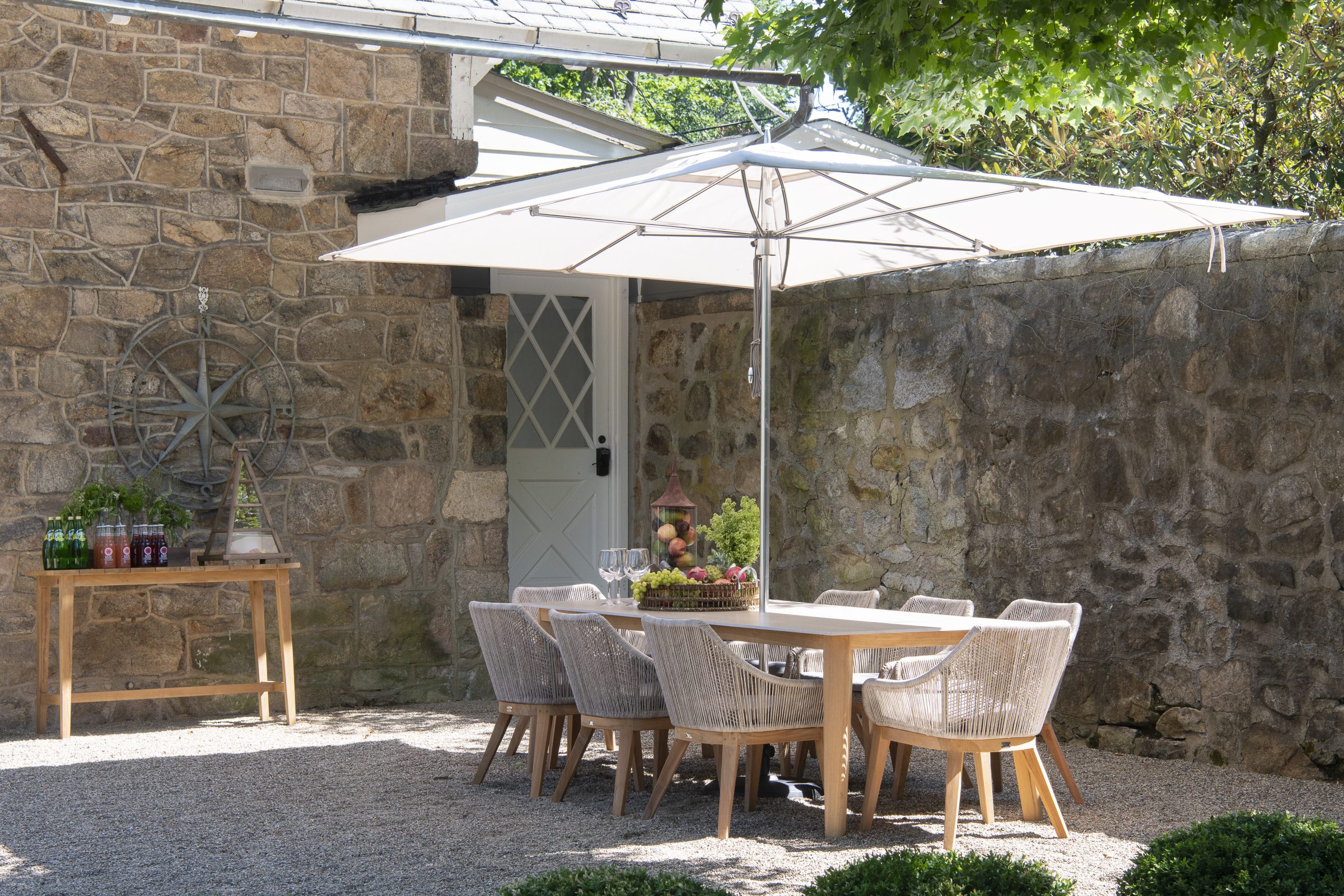
You’ve invested serious thought and money into your home. The kitchen is right. The living room works. The finishes reflect the way you actually want to live. And then you look out the back window at a yard that doesn’t match any of it: a patio that’s too small for the way you entertain, plantings that were chosen by a previous owner or dropped in by a crew that never asked how you use the space, and lighting that ends at the back door.
It’s the kind of gap that compounds over time. You host a dinner party, and everyone ends up inside because the patio isn’t set up for it. You spend a Saturday morning with coffee at the kitchen table, looking out at a yard that’s fine but never pulls you through the door. Maybe you’ve called a landscaper before and gotten a proposal that felt generic: a plant list, a material spec, a price, but no real vision for how you’d actually live out there. So the project stalls, or you settle for something incremental, and the gap between your home and your landscape stays exactly where it was.
Luxury landscape design exists to close that gap. It’s the discipline of designing outdoor space around the life you want to live in it, with the same intention and specificity you’d bring to a kitchen renovation or a home addition. And when it’s done well, it changes the way you use your property every single day.
We’ve spent more than four decades doing this work across Northern New Jersey, from Summit and Short Hills to Basking Ridge, Bernardsville, and the surrounding communities. This guide walks through what luxury landscape design actually involves: how it differs from standard landscaping, what the process looks like from first conversation to finished project, and how to find the right partner for the work.
What Is Luxury Landscape Design? (and Why It’s Different)
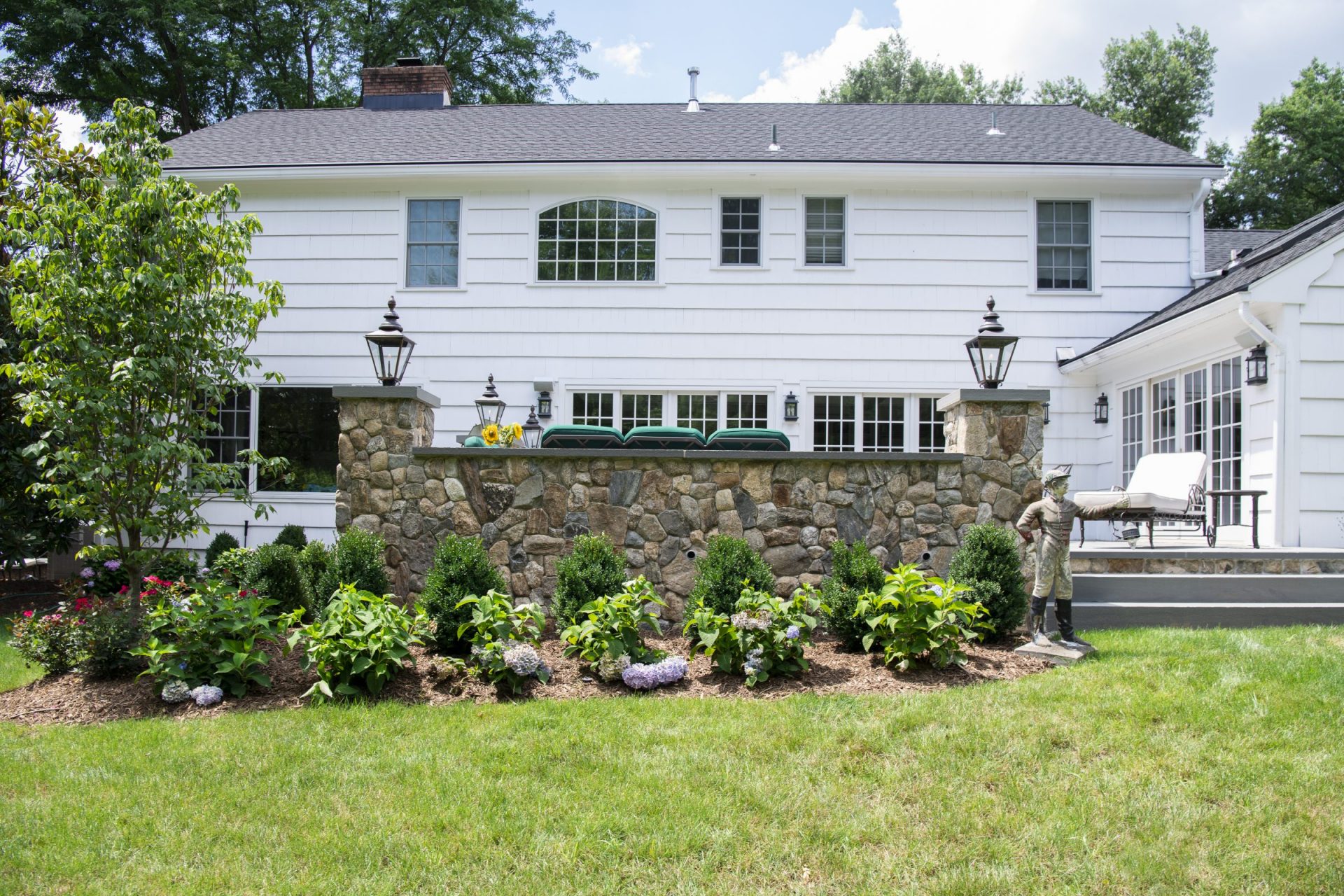
Standard landscaping solves surface-level problems. It fills beds, mows lawns, trims hedges, and keeps things tidy. There’s nothing wrong with that work, and every property needs it. But luxury landscape design starts from a fundamentally different question: how do you want to live in your outdoor space?
That question leads to a different kind of project. Instead of choosing plants from a catalog and placing them around the yard, a luxury landscape begins with studying the property itself: its grading, drainage, sun exposure, sight lines, soil composition, and relationship to the home’s architecture. It considers how you move through the space, how you entertain, where you want privacy, and what you want to see when you look out your windows in January versus July.
The result is a landscape that extends your home. Outdoor kitchens that align with how you actually cook and host. Patios sized and oriented to how your family uses them, with lighting that lets you stay outside well past sunset. Plantings that create structure, rhythm, and seasonal interest rather than simply filling empty space. Luxury landscapes are built around the life you want to live outside, and every decision, from hardscape materials to drainage engineering, serves that goal.
The Design-Build Difference: Why It Matters for Your Project
If you’ve started searching for a “landscape designer near me” or researching landscape design and installation firms, you’ve probably noticed that some companies design, some companies build, and some do both. That distinction matters more than it might seem.
In a traditional model, you hire a landscape architect or designer to draw plans, then hire a separate contractor to build them. The designer imagines the project; the builder interprets it. And in that gap between imagination and interpretation, things get lost. Materials get substituted. Grading changes force compromises. The contractor discovers something underground that the designer didn’t account for, and suddenly the plan needs to be revised while the crew stands idle.
A design-build firm handles both sides. We design and build the project with our own crews, which means the people drawing your plans are the same ones who understand what the soil on your property can support, how your specific lot drains, and what a realistic construction timeline looks like given the season. Problems get solved in the design phase, not on the job site.
For homeowners investing in a luxury landscape, this integration is essential. The level of detail and coordination that separates a great project from a good one, the way a stone wall meets a planting bed, the grade of a patio that ensures water moves away from the house invisibly, the seamless transition from an indoor floor level to an outdoor living area, depends on the design team and the build team sharing the same vision, the same standards, and the same accountability. At Limbach’s, we’ve operated as a design-build firm since 1976. It’s the only model we’ve ever used because it consistently delivers the results our clients expect.
Key Elements of a Luxury Landscape in Northern New Jersey
Every property is different, but luxury landscapes in this part of New Jersey tend to share certain elements, shaped by the region’s climate, topography, and the way homeowners here use their outdoor space.
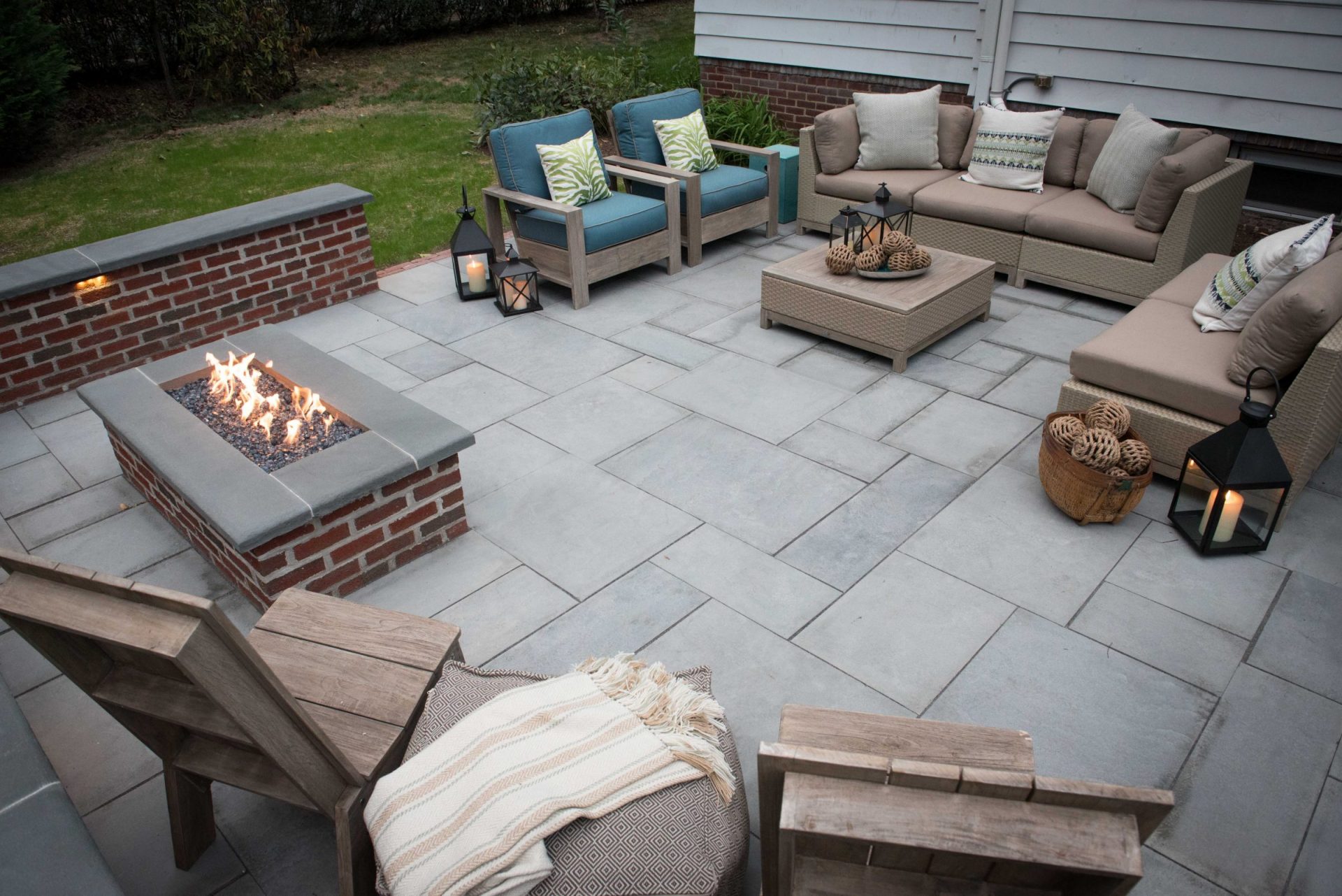
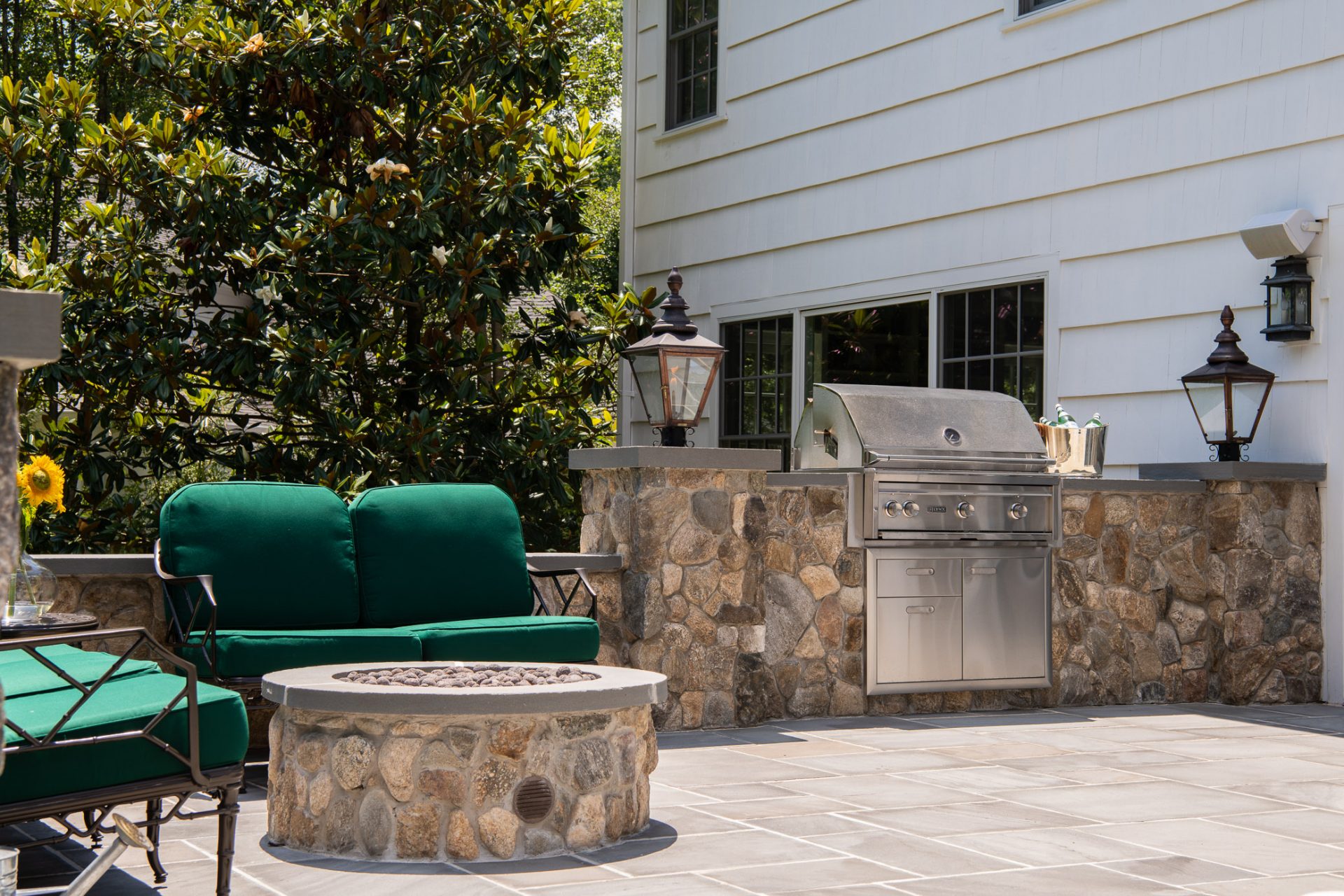
Outdoor living areas are often the centerpiece. A well-designed patio or terrace becomes a true room, with defined zones for dining, lounging, and cooking. Natural stone, bluestone, and premium pavers are common choices for their durability and their ability to complement the traditional and transitional architecture prevalent in towns like Summit, Madison, and Bernardsville.
Outdoor kitchens and fireplaces extend the usable season. Northern New Jersey’s shoulder months, April – May and September – November, are some of the best times to be outside. A fireplace or fire pit, paired with a functional kitchen, turns those cool evenings into some of the most enjoyable nights of the year.
Water features and pools add movement, sound, and a focal point that reshapes how the entire property feels. Whether it’s a naturalistic stream integrated into a sloped lot or a clean-lined fountain anchoring a formal garden, water changes the character of a space in ways that static elements cannot.
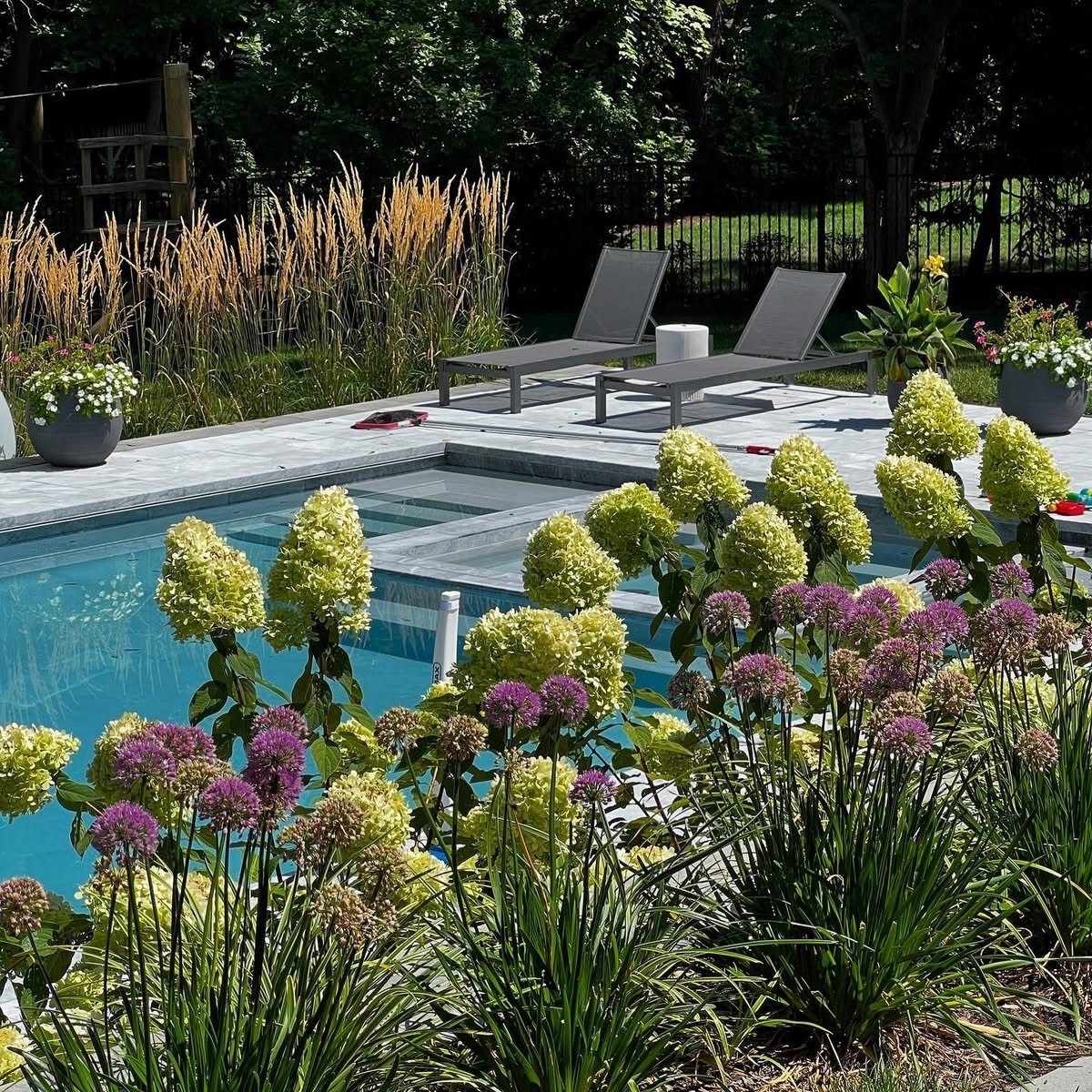
Pools take that a step further. A well-designed pool becomes the center of gravity for the whole yard, but only when the landscape around it is treated as part of the same composition. The water, the planting, the paving, and the sightlines all need to work together. Without that, even a beautifully built pool can feel placed rather than planned, dividing the yard instead of unifying it.
Plantings with year-round structure are what distinguish a landscape that looks intentional from one that looks planted. This means an evergreen backbone, ornamental trees chosen for winter silhouette and spring bloom, and perennial layers designed for successive interest from March – November.
Lighting is often underestimated and almost always transformative. A well-lit landscape doubles the hours you spend outside and changes the entire feel of your property after dark. Path lighting, uplighting on specimen trees, and subtle accent lighting on architectural features create depth and warmth that vanish the moment the sun goes down if left unaddressed.
Grading and drainage engineering aren’t glamorous, but they’re the foundation on which everything else depends. Northern New Jersey’s clay-heavy soils and variable terrain make drainage planning critical. A luxury landscape accounts for water management as a core design element, routing runoff invisibly and protecting both the landscape and the home’s foundation.
What to Expect From Design To Installation
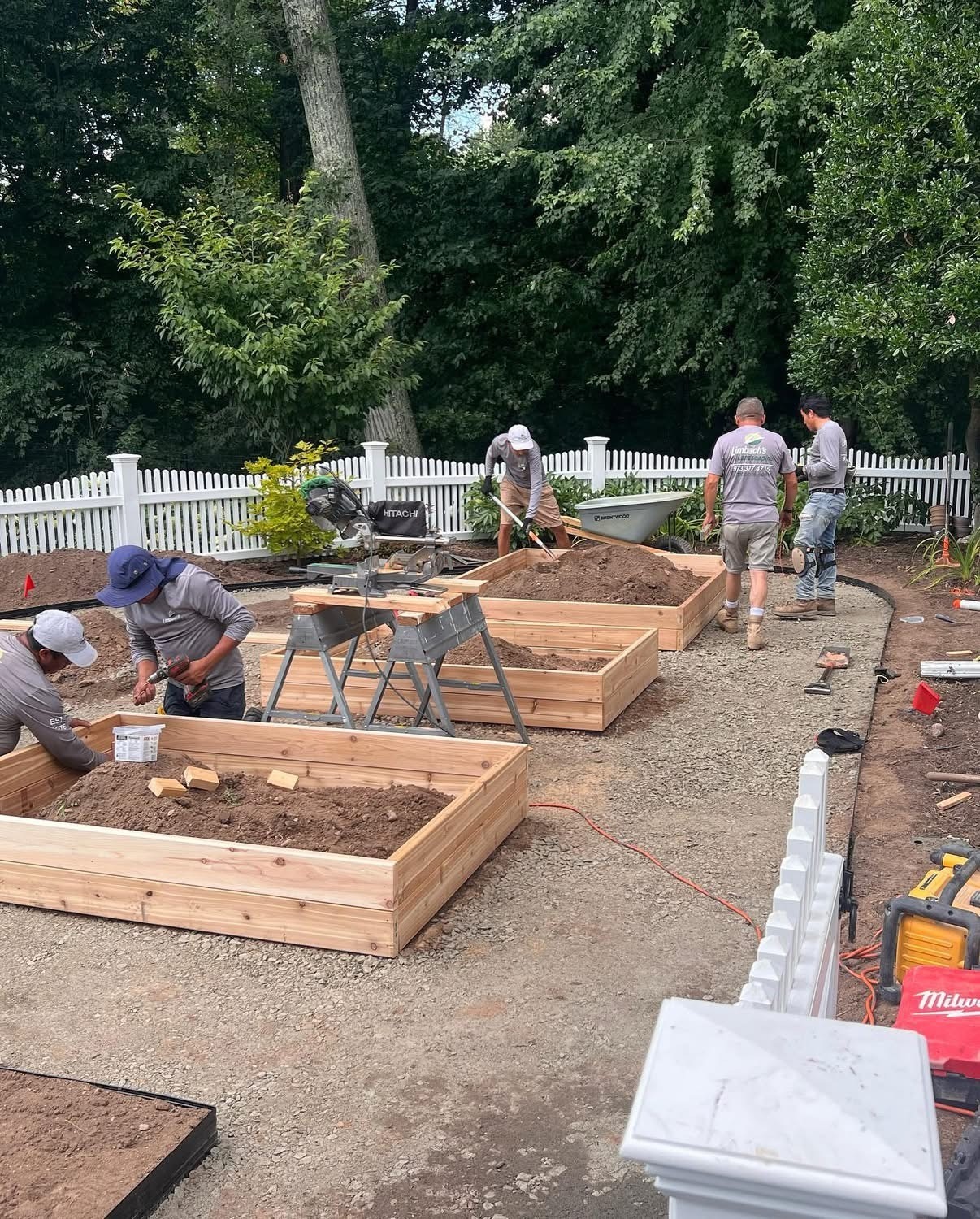
One of the most common questions we hear from homeowners exploring luxury landscape design for the first time is simply: how does this work? The process can feel opaque from the outside, so here’s what it typically looks like when you work with a design-build firm like ours.
Initial Consultation
We visit your property, walk the space with you, and listen. What do you love about your yard? What frustrates you? How do you use it now, and how do you wish you could use it? We’ll look at the architecture of your home, the existing conditions, and the opportunities the site presents. This conversation is the foundation of everything that follows.
Site analysis and concept development
After the consultation, we study the property in detail: measurements, elevations, soil conditions, sun and shade patterns, existing plantings to be preserved, and any utility or easement constraints. From that analysis, we develop initial design concepts that respond to your goals and the site’s realities.
Design refinement
We present concepts and refine them with your input. This is a collaborative phase. You’ll see how spaces relate to one another, how materials and plantings work together, and how the project phases if the scope calls for a staged approach. We finalize the design, the materials palette, and the planting plan before a single shovel hits the ground.
Installation
Our crews build what our designers drew. Because we’re a design-build firm, the handoff is seamless. The designer stays involved through construction, and the build team has been part of the conversation from the beginning. You’ll have a single point of contact throughout, and the timeline we set at the start of the project is the timeline we hold ourselves to.
Walkthrough and handover
When the project is complete, we walk through every detail with you. We’ll cover care instructions for new plantings, explain how your irrigation and lighting systems work, and discuss a maintenance plan to protect your investment going forward. If you’d like to see how finished projects come together, our portfolio shows the range of work we do across the region.
How NJ’s Climate and Geography Shape Great Landscape Design
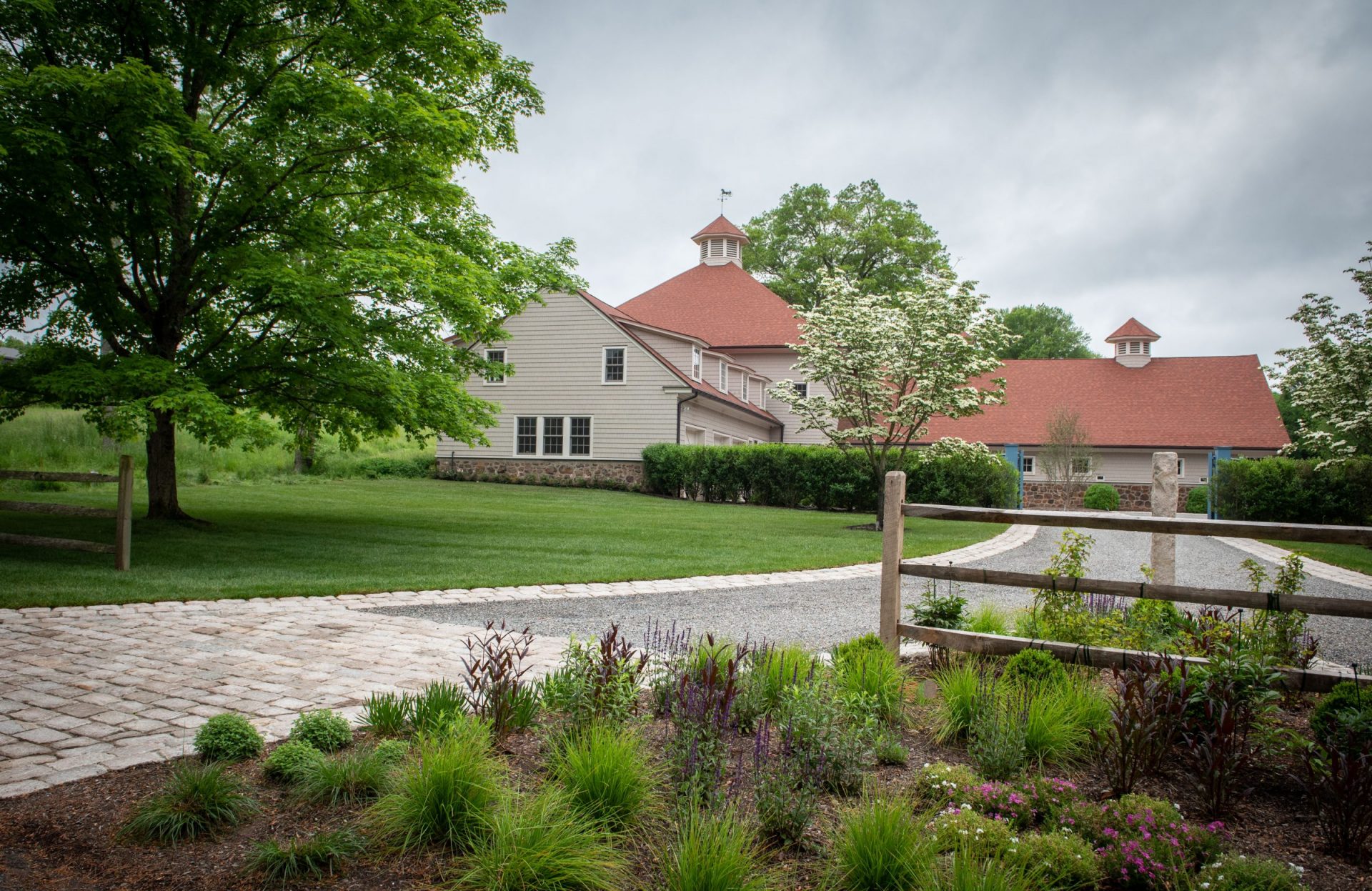
Northern New Jersey lies in USDA Hardiness Zones 6b/7a, which gives us a four-season climate with real winters, humid summers, and two gorgeous transitional seasons that are the reward for enduring both. Designing for this climate means thinking beyond how a landscape looks on its best day in June and planning for how it performs throughout the year.
Winter is a design test. When the perennials are dormant, and the deciduous trees are bare, the landscape’s structure is fully exposed. This is when you see whether the bones of the design hold up: the evergreen framework, the hardscape geometry, and the placement of ornamental trees chosen for bark texture and branching habit. A luxury landscape should look compelling in February, and that requires intentional design for the leafless months.
Spring drainage matters. Snowmelt and spring rain hit Northern New Jersey hard, especially on properties with slopes or clay subsoil. Proper grading, French drains, dry wells, and permeable hardscape materials keep water moving where it should go and away from where it shouldn’t. This is engineering, and it has to be right before the aesthetic layers go in.
Summer humidity affects plant health. The airflow around plantings, the spacing of shrubs, and the selection of disease-resistant cultivars all matter more here than they would in a drier climate. Good design accounts for humidity when selecting plant placement and species, reducing maintenance headaches and keeping the landscape looking healthy through August.
Fall is the payoff. Northern New Jersey’s fall color is genuinely spectacular, and a well-designed landscape takes full advantage of it. Sugar maples, sweetgums, oaks, and ornamental grasses come alive in October and November, creating a property that draws your eye outside at the exact moment the days are getting shorter.
The properties in Summit, Short Hills, Basking Ridge, and the surrounding communities share many of these conditions, but each site has its own microclimate, soil profile, and relationship to sun and wind. Understanding those particulars is what separates a landscape that thrives from one that struggles.
What Luxury Landscaping Looks Like in Summit and the Surrounding Area
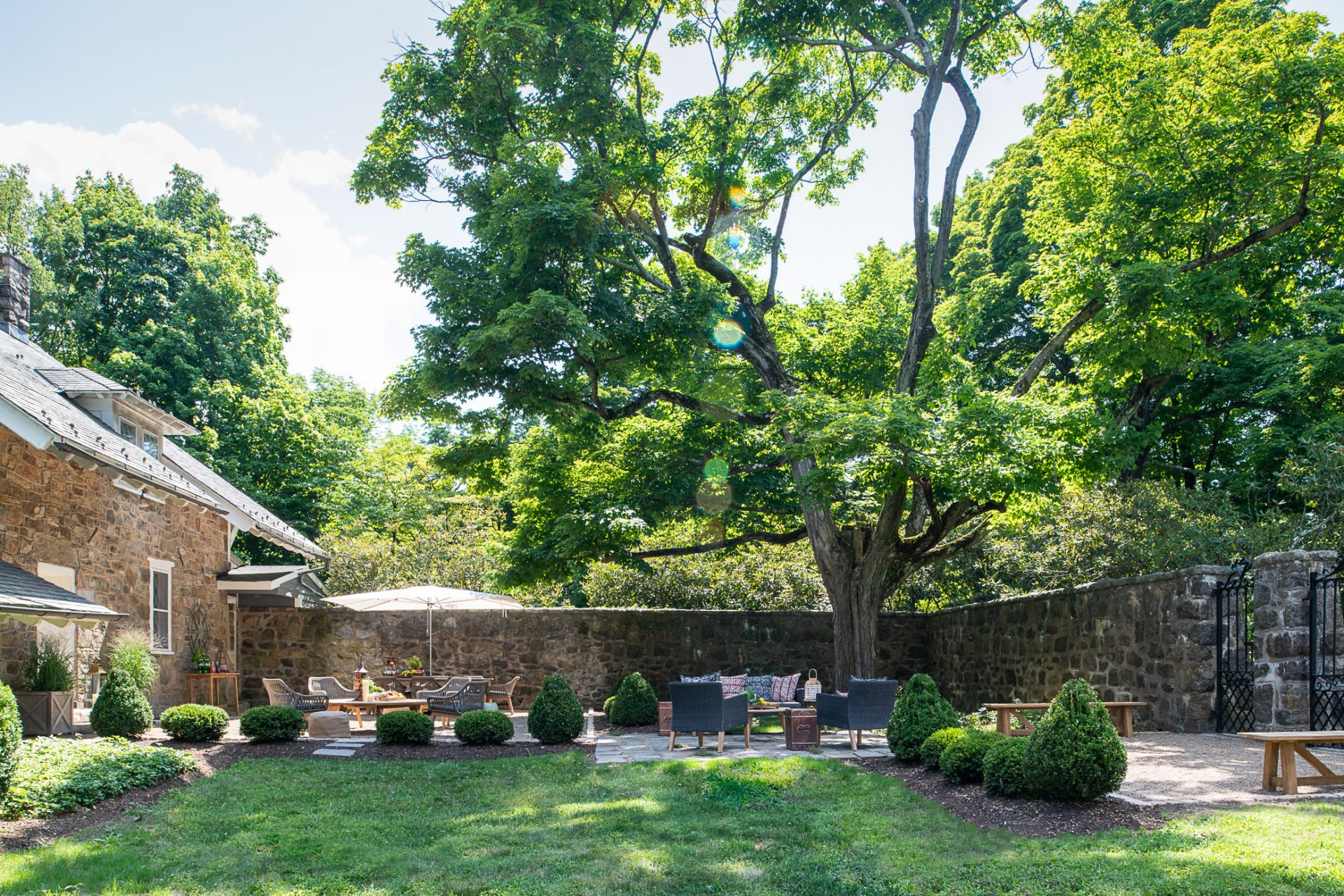
Everything we’ve described in this guide, the design-build process, the attention to climate and site conditions, the integration of hardscape, plantings, and lighting into a single cohesive vision, shows up most clearly in the finished work.
Over nearly five decades, we’ve designed and built luxury landscapes across Summit, Short Hills, Basking Ridge, Bernardsville, Madison, Gladstone, and the surrounding communities. Each property brought its own conditions: a steep lot that needed creative grading, a flat suburban yard that needed structure and privacy, a historic home that demanded a landscape in conversation with its architecture. The common thread is a process that starts with the homeowner’s life and ends with a landscape built around it.
Browse our project portfolio →
You’ll see the range of work we do, from intimate courtyard gardens to multi-phase estates, and get a sense of how different sites, goals, and styles come together through the same design-build approach.
Landscape Maintenance Tips for Luxury Homeowners: Protecting Your Long-Term Investment
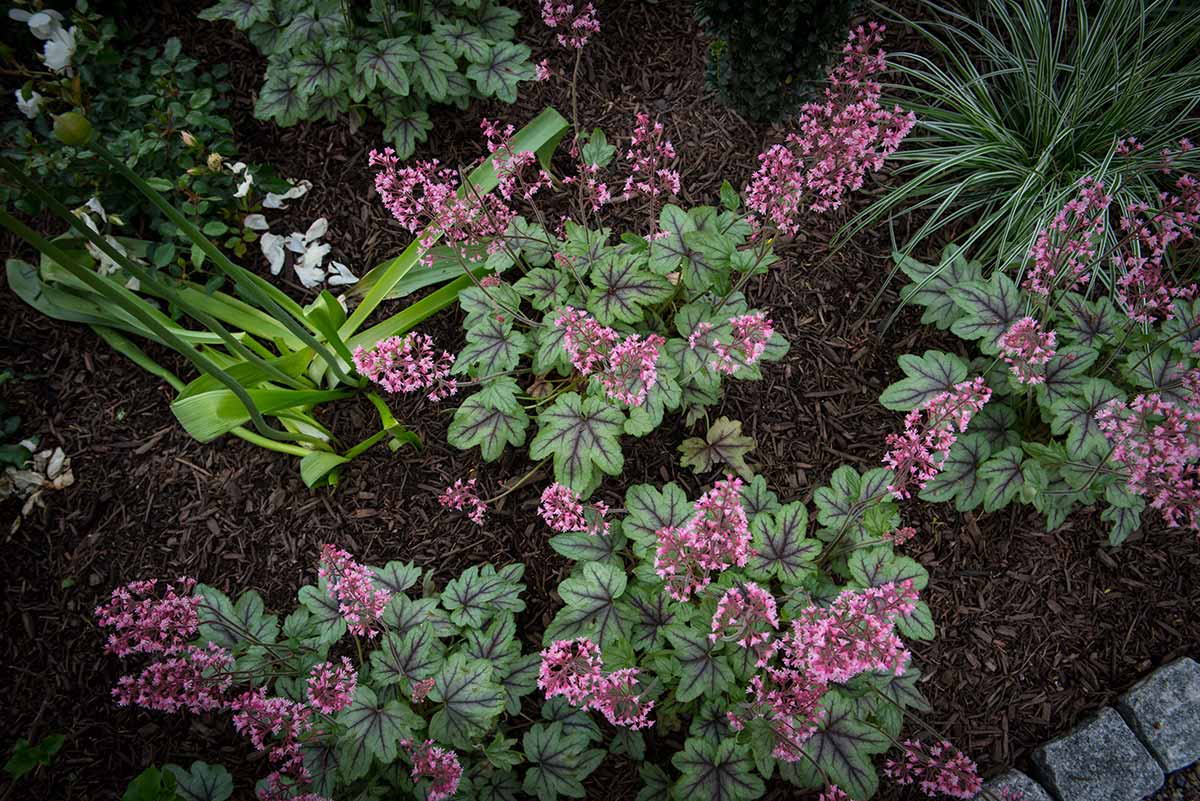
A luxury landscape is a significant investment, and like any investment, it performs best with ongoing attention. The good news is that a well-designed landscape is also well-planned, meaning the maintenance it requires should be predictable, manageable, and built into the original design. Here are the landscape maintenance tips that matter most for homeowners in Northern New Jersey:
Seasonal pruning keeps the structure intact. Ornamental trees and large shrubs need annual or biannual pruning to maintain their shape and health. The timing matters: spring-blooming shrubs get pruned after they flower, while summer bloomers are best pruned in late winter. Improper pruning, especially the kind that reduces a plant to a geometric ball regardless of its natural form, undoes the design intent faster than almost anything else.
Irrigation systems need seasonal calibration. Your watering needs in May differ from those in August. Smart controllers help, but they still benefit from seasonal adjustments based on rainfall patterns and plant establishment. New plantings need more attention in their first two growing seasons than they will once established. Hardscape maintenance is simple but essential. Polymeric sand in paver joints should be inspected annually and replenished as needed. Natural stone may need periodic sealing depending on the material. Retaining walls should be checked for any movement, especially after the spring thaw.
Soil health is the long game. Annual soil testing tells you what your plantings need and, equally important, what they don’t. Over-fertilization is as common as under-fertilization, and both cause problems. Topdressing planting beds with quality compost each spring maintains the soil biology that keeps plants thriving naturally.
Leaf and debris management protects turf and beds. Northern New Jersey’s mature tree canopy produces a significant volume of fall leaves. Letting them sit on lawns or smother perennial beds through winter invites disease and delays spring recovery. A clean fall closeout sets the stage for a strong start in March. If ongoing maintenance feels like more than you want to manage yourself, a professional maintenance plan keeps everything on schedule and catches small issues before they become expensive ones.
How to Choose the Right Luxury Landscape Designer in NJ
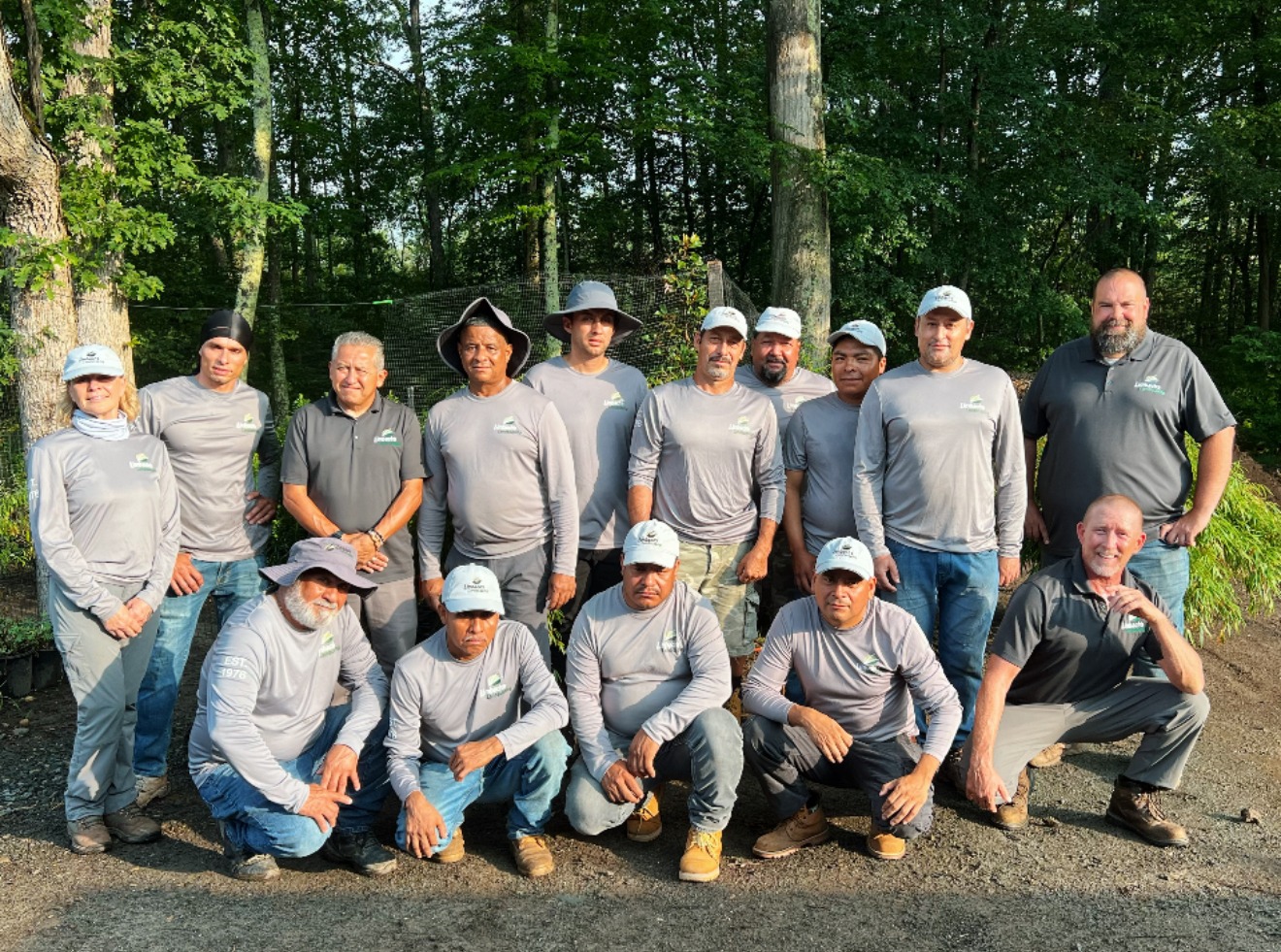
Choosing a landscape designer is a decision that affects your property and your daily life for years. Here’s what we’d encourage you to consider as you evaluate firms, including ours. Look for a design-build model. As we covered earlier, integrating design and construction under one roof reduces miscommunication, controls costs, and delivers better results. Ask any firm you’re considering whether they design and build in-house or subcontract portions of the work.
Ask about process, not just outcomes. A beautiful portfolio matters, but so does the process behind it. How does the firm handle the consultation? How detailed are their design presentations? What happens when something unexpected comes up during construction? The answers tell you a lot about how your experience will go.
Check longevity and local knowledge. Landscaping in Northern New Jersey requires specific knowledge: the soils, the climate, the local regulations, and the plant species that perform here versus those that look great in a catalog but struggle in our humidity and winters. A firm with deep roots in the region, like our nearly five decades in the area, brings experience that can’t be replaced.
Visit finished projects. Photographs show you a moment. Walking a property that was completed two, five, or ten years ago shows you how the work holds up. Ask to see mature projects, and pay attention to how the plantings have grown in, how the hardscape has weathered, and whether the landscape still feels intentional rather than overgrown.
Trust the conversation. The right firm listens more than it talks in the first meeting. If a designer walks your property and immediately starts telling you what you need before asking what you want, that tells you something about how the rest of the relationship will go. We welcome the comparison. If you’re researching landscape design in Summit, NJ, or the surrounding area, we’re happy to be one of the firms you talk to, and we’re confident you’ll find what you’re looking for.
Ready to Transform Your Outdoor Space with Landscaping in Summit, NJ?
If you’ve read this far, you’re past the point of wondering whether your landscape could be better. You already know it can. The next step is a conversation. We’ll visit your property, listen to what you’re imagining, and help you understand what’s possible given your site, your goals, and your timeline. There’s no commitment in that first meeting, just an honest exchange between people who care about doing this work well and a homeowner who’s ready to invest in the way they live outside.
Summary
The passage invites the homeowner into a thoughtful first step: a conversation centered on their property, ideas, and goals for outdoor living. In this initial meeting, the team comes to the site, listens carefully to the homeowner’s vision, and offers guidance about what is realistically possible based on the property itself, the desired outcome, and the project timeline. Rather than pushing for a commitment, the emphasis is on openness, clarity, and mutual understanding. The meeting is presented as a low-pressure opportunity to explore possibilities and gain insight, not as a sales pitch or obligation.
What stands out most is the tone of respect and care. The team positions itself as experienced professionals who value doing the work properly and who want to help homeowners make informed decisions. At the same time, the homeowner is described as someone prepared to invest not just in a project, but in the quality of life they want to create outdoors. The passage suggests that a successful project begins with trust, honest communication, and a shared understanding of what matters most. Overall, it frames the first consultation as a collaborative and sincere exchange designed to set the foundation for a well-considered, meaningful outdoor transformation that reflects both practical realities and personal aspirations.
Tags: